Our Approach

History and Structure

In 2006, the Government of British Columbia passed the Southern Interior Development Initiative Trust Act, which established us as an independent not-for-profit corporation. We were created to support investments that help grow and diversify the economy of the Southern Interior of BC. Since then, we have received a total of $60 million to steward, for the benefit of the region. The Trust is independently governed by a 13-member Board of Directors. We have two Regional Advisory Committees (RACs), that represent the Columbia-Kootenay and Thompson-Okanagan regions of our service area. Each RAC appoints four Directors to the ETSI-BC Board. RAC members include local government elected officials and MLAs. The Provincial Government appoints the remaining five Directors, all of whom reside in our service area.
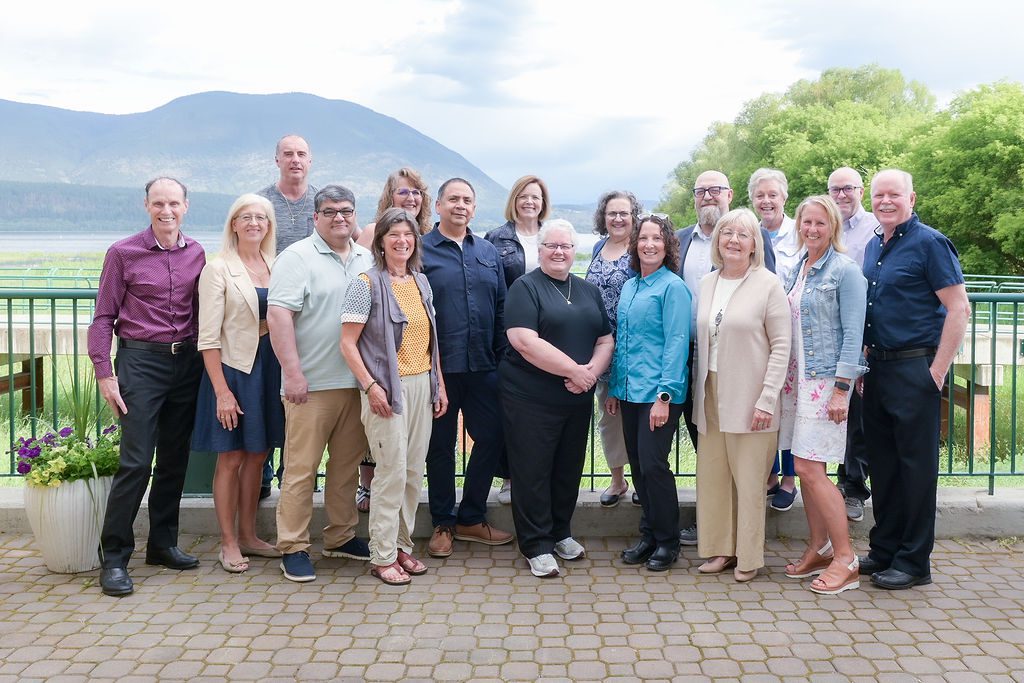
From L to R: Alan Harrison, Renata King, Kevin Acton, Wayne Kaboni, Sue Cairns, Diana Lockwood, Paul Donald (Chair), Laurel Douglas (CEO), Gladys Fraser, Mary Beadman, Julie Kimmel, Lincoln Smith, Peggy DeVries, Sue McKortoff, Roberta Schnider, Frank Marino, Paul Wiest.

In April 2021, following extensive consultation with over 400 stakeholders, we re-launched the organization as the Economic Trust of the Southern Interior (ETSI-BC) and re-focused our direction from being a commercial lender to supporting the region’s communities, First Nations, non-profit business support organizations, accelerators, industry groups and public post-secondary institutions, with special focus on the smaller rural communities and First Nations, and on being a first-in seed funder of new innovative initiatives to help strengthen local economies.

Since our re-launch, our strategic plan has been focused on creating value for our region by providing grant funding, resources, training and connections, guided by our five Strategic Pillars.

Our Approach

An ecosystem is a dynamically stable network of interconnected firms and institutions in a bounded geographical area. Thinking of regional economic networks as ‘ecosystems’ provides structure and depth when analyzing sources of regional advantage, the role of entrepreneurs in regional development, and the determinants of resilience in regional economic systems. (Source: The New Oxford Handbook of Economic Geography). The economic ecosystem has also been called a ‘tapestry’. The more tightly woven the components are, the more effective it is. Business development activities include attracting, retaining, and expanding businesses. Economic foundations focus on talent, infrastructure, innovation, and other building blocks.

To help weave our tapestry more tightly here in the Southern Interior, ETSI-BC encourages collaboration between communities and First Nations on joint projects, and sharing of wise practices. We help fuel communities to strengthen their economic foundations, market their area, attract/retain businesses and access qualified workers. We support business support organizations, industry groups and accelerators to help businesses grow, adopt technology and innovate. We encourage the post-secondary sector to innovate, develop entrepreneurial/job-ready graduates and collaborate on research to help address our region and its businesses’ issues.


Our Results

Highlights

By 2020, SIDIT had invested nearly $63 million that helped leverage other funding for a total project value of over $245 million invested in the region. This included:

    • $49 million in venture and growth loans to businesses in the region,

    • $7 million in grant funding to the region`s six main post-secondary institutions,

    • $3.5 million in support of economic development projects, and

    • $3.5 million for local governments and non-profits, primarily in support of tourism, agriculture, and sport-related projects.

By March 31, 2026, the impact of ETSI-BC has been significant. Since inception, the organization has

    • Approved Funding $75,664,874

    • Number of projects 857

    • Total project value $281,654,929

    • Jobs created or maintained 29,957