
Since 2021, the Township of Spallumcheen has been exploring the development of a regional Agri-Hub to strengthen local food distribution and support agricultural growth. With support from ETSI-BC, the Township is developing a phased business plan to help build a resilient and profitable agricultural sector for the future.

Small Scale Abattoir in the Columbia Valley Makes a Big Impact
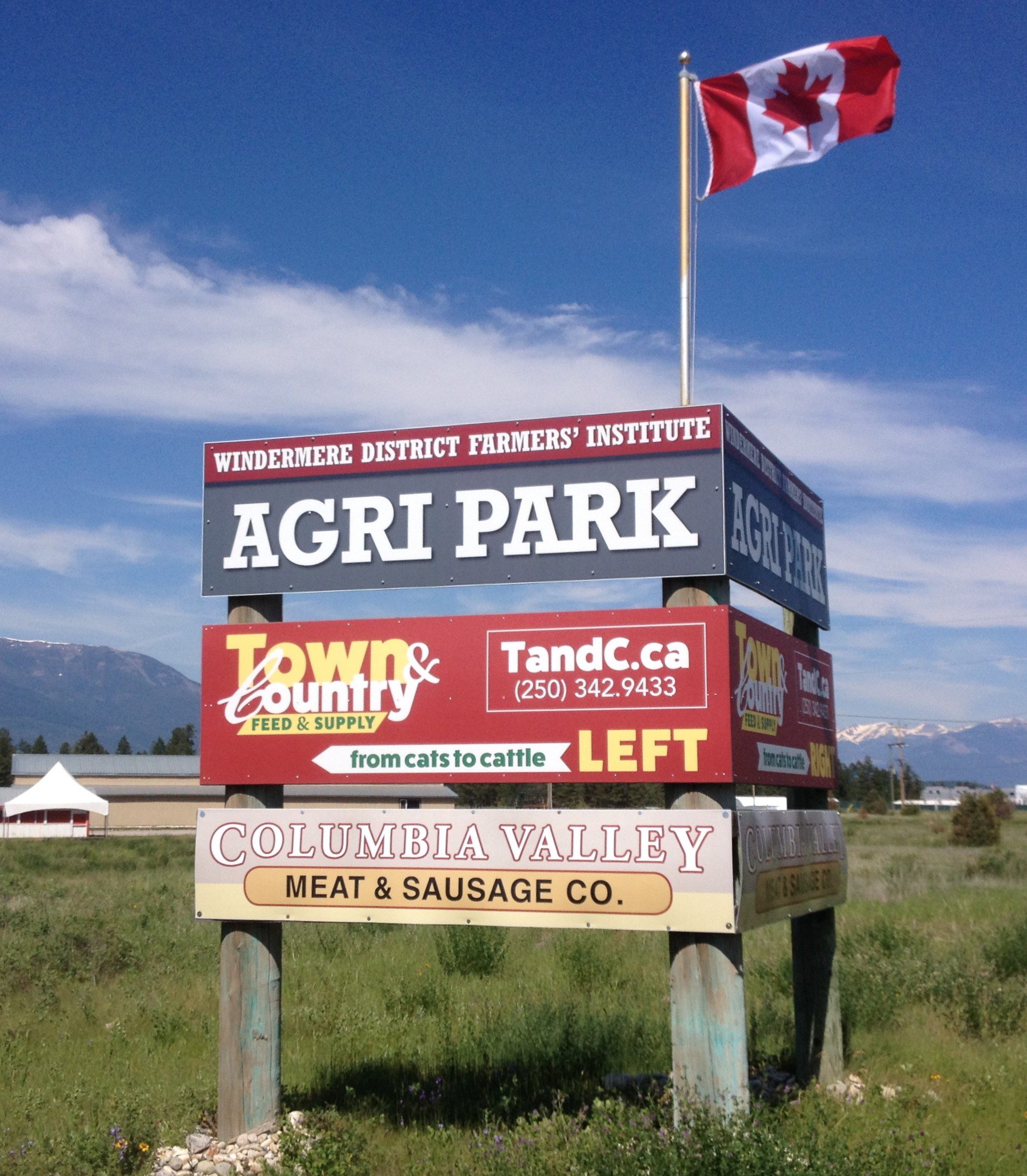
If you are a chef or restaurant owner in the Columbia Valley, your meat supply chain may have looked vastly different prior to 2017 than it does today. You most likely purchased beef, pork, and lamb from grocery chain suppliers or large-scale wholesalers, and finding locally-raised, grass-fed organic meat was nearly impossible. Now, those who value humane livestock handling and local, quality products are in luck.
Enter the Columbia Valley Abattoir, a small-scale slaughterhouse catering to many valley businesses, located in Invermere, BC. Run by long-time Invermere groceries merchant Grant Kelly of Grant`s Foods, the project was a vision of the Windermere District Farmers Institute and Livestock Association (WDFI). The WDFI, incorporated in 1914, represents the interest of the agricultural community from Canal Flats to Golden.
The licensed facility enables locally produced livestock to be legally inspected and butchered humanely. This directly addresses regional priorities such as food safety and security and agricultural values for land, both important considerations for the Economic Trust of the Southern Interior (ETSI-BC).
“Being able to buy meat locally helps the whole economy,” says WDFI project coordinator Hedi Trescher. “People really embraced that part; selling directly cuts out the middleman, and both the producers and the consumers get the benefit of that. It has also really deepened the sense of community.”
Fresh choices help businesses connect and thrive
Local chefs connect with ranchers, who bring their livestock to Kelly and his team for slaughter, cut, and packaging. This local supply chain process allows meat to be easily transported and stocked by chefs and has changed the way many local restaurants and hotels do business in the area. With patrons ranging from a small highway-side mom-and-pop food truck to the Fairmont Hotel — and many pizza parlors and bustling cafes in between — fresh local meat is available throughout the region, enhancing palettes and bringing big flavour.
To get the WDFI project off the ground, Trescher first helped put together a solid action plan, including reviewing zoning and feasibility. In 2016, after years of efforts securing approvals and reconfirming funding, including a $25,000 grant from ETSI-BC, project construction — emphasizing the use of local trades — began.
“Our main challenge was zoning, followed by funding,” says Trescher. “While private donations and the WDFI paid for the majority of the project, additional funds from contributors (like ETSI-BC) also helped get the abattoir built. Then it was just a matter of finding an operator, which is where Grant came in. Fast forward to today and the positive effect that this business has had on other businesses in the community is wonderful.”
The facility`s need for contract and part-time workers has created substantial opportunities in the area: Kelly estimates he`s paid out over $100,000 in labour over the past four years. Business has been booming according to Kelly, who says they’ve steadily grown since starting operation, doubling their sales in 2020. But expanding the job market isn’t the only way that the Columbia Valley Abattoir has contributed economically; its emphasis on developing strategic partnerships and its effect on certain sectors has been especially palpable.
Farm-to-table outlook strengthens local food security and economy
Hospitality and tourism, both important industries in the region, have long been leaning towards fresh, local, hormone-free products; however, sourcing in the region was difficult and costly prior to the abattoir`s construction. Stricter meat processing regulations were enforced beginning in 2004, changing the landscape of historical livestock processing in the valley. With the closest licensed facility almost 150 kms away, stress and costs were high for farmers and ranchers forced to travel long distances. During nearly 15 years without a local abattoir, many small producers went out of business, and the availability of local meat dwindled for regional restaurant owners.
While the project faced some challenges at first, including community members expressing concern about traffic, noise, and smell, WDFI soon demonstrated that the 1,696 square foot facility would not come with any of the downfalls often associated with larger-scale operations. It`s been successfully operating quietly and efficiently since 2017, and been a boon for the communities it serves.
In addition to the economic benefits of the project, locally producing meat cuts down on excessive transport costs and therefore reduces the meat industry`s carbon footprint. Those involved hope that the revitalization of this part of the local agricultural sector will also correlate to increased pride and educational and career opportunities for young people in the region.
Chefs and restaurant patrons certainly appreciate the Columbia Valley Abattoir, as its existence has not only enhanced the local economy, but also made local food much more accessible (and delicious) for everyone.
More News & Stories
New Tourism Strategy Transforms Grand Forks from a Highway Stop to a Destination
The Southern Interior community of Grand Forks has completed a major rebuild and relaunch of its original tourism strategy, shifting the community from being a quick stopping point on Highway 3 to a tourism destination. With support from the Economic Trust of the Southern Interior (ETSI-BC), the strategy served to develop new tourism assets attracting more visitors and generating increased revenue for local businesses.
Sicamous Tourism Strategy Builds a Path for Sustainable Growth
From houseboating to sledding, hiking, biking, and birding, Sicamous is the tourism hub of the Shuswap region. While summer visitors fill Sicamous with activity, off-season visitations drop sharply, prompting the community to pursue a more diversified and sustainable year-round tourism future. The Economic Trust of the Southern Interior (ETSI-BC) supported the District of Sicamous Development Corporation in revitalizing the community’s tourism sector with a dynamic, five-year tourism strategy to 2030.
Forestry Strategy Positions ?aq’am First Nation for New Opportunities
Increased timber harvest allocations for BC’s First Nations are opening the door to new business opportunities for enterprising First Nations communities such as ?aq’am in the East Kootenays. With funding support from the Economic Trust of the Southern Interior (ETSI-BC), ?aq’am developed a forestry business scan, a strategy to build capacity for projects made possible by the expanded forest tenure. The scan is guiding ?aq’am to increase its role in forestry as it pursues a resilient and sustainable future.
ETSI-BC Welcomes Krista Mallory as Regional Project and Strategic Initiatives Manager
July 29, 2026 – The Economic Trust of the Southern Interior (ETSI-BC)) is pleased to announce that Krista Mallory will be joining the organization as its new Regional Project and Strategic Initiatives Manager effective October 1, 2026.
Wayfinding in Barriere for Economic Resilience and Growth
When a major fire destroyed the Tolko sawmill in the North Thompson region near Barriere in 2003, residents and stakeholders rallied to rebuild and redefine the community’s economic future. As the community has evolved, so have the systems that help residents and visitors navigate in and around Barriere, including a multi-phase Wayfinding Strategy launched in 2024. The project, supported by the Economic Trust of the Southern Interior (ETSI-BC) is aimed at boosting visitor traffic and attracting more business investment, ensuring a strong and resilient future.
Five-Year Plan Strengthens ?aq’am Community Enterprises
?aq’am Community Enterprises (ACE) is the economic development arm of the ?aq’am First Nation, the largest member of Ktunaxa Nation. Known for its progressive business development goals, ACE undertook a comprehensive review of its strategic priorities. The result is a dynamic new five-year strategic plan that will guide more efficient, tactical, and resilient delivery of ACE’s programs and services. The project was supported by the Economic Trust of the Southern Interior (ETSI-BC).
Thompson-Okanagan Launches New Economic Development Practitioners Network
After a year of work connecting economic development practitioners across the Thompson-Okanagan, the region’s first Economic Development Practitioners Network (EDPN) is now in place. Modelled after the Kootenay Boundary EDPN created in 2014, the Thompson Okanagan EDPN includes community and municipal and First Nations economic development practitioners, Chambers of Commerce, Community Futures and other stakeholders. The group came together for the first time on April 8, 2026, where they learned, shared ideas and information, and further planned future activities. The Economic Trust of the Southern Interior (ETSI-BC) is committed to supporting both the Kootenay Boundary and Thompson-Okanagan networks of economic development practitioners.
2027-30 Strategic Planning and DAAP 4.39 Updates
June 25, 2026 – The Economic Trust of the Southern Interior (ETSI-BC) is grateful for the input from partners, funding recipients, committee members and other regional stakeholders who have taken the time to help inform our next three-year Strategic Plan for 2027-30. We are also pleased to provide an update on the status of the DAAP 4.39 action item.
ETSI-BC Fall 2026 Funding Intake: Up to $1M Available for Projects
June 18, 2026 – The Economic Trust of the Southern Interior (ETSI-BC) is pleased to announce that its next Funding Intake will launch on Tuesday, September 1, 2026 and close on Thursday, October 1, 2026.