
Since 2021, the Township of Spallumcheen has been exploring the development of a regional Agri-Hub to strengthen local food distribution and support agricultural growth. With support from ETSI-BC, the Township is developing a phased business plan to help build a resilient and profitable agricultural sector for the future.

Creating a More Vibrant Naramata
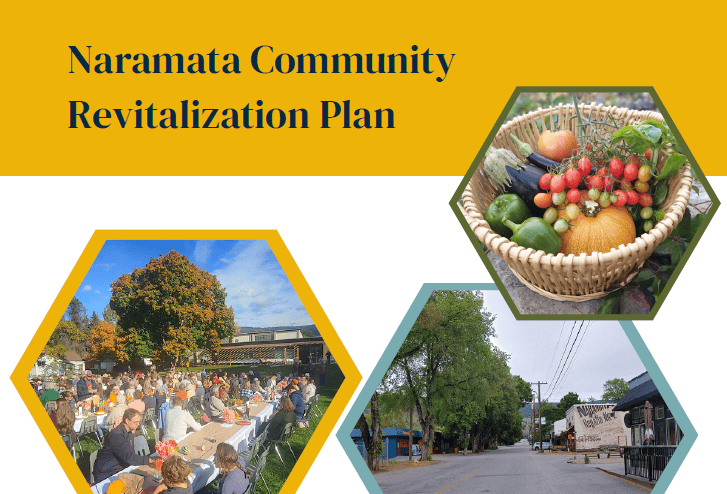
In the quaint village of Naramata in the South Okanagan, the area’s natural beauty, history and community spirit are highly valued by its approximately 1,000 residents. Situated on Naramata Bench with stunning views of Okanagan Lake, Naramata maintains a strong tourism industry, but with no economic development function, improvements were lacking in the spaces where people work, recreate, explore and do business. In 2024, the Regional District of Okanagan Similkameen (RDOS) launched a Community Revitalization project to encourage people to spend more time in the village centre and to attract more permanent residents.
Adrienne Fedrigo, a regional Director with the RDOS, took the lead on developing the Community Revitalization Plan with support from the Economic Trust of the Southern Interior (ETSI-BC). We spoke to Adrienne about Naramata’s changing look and feel as the plan rolls out.
What was the inspiration for revitalizing Naramata?
It actually goes back to a pilot project earlier this year that placed a porta potty within Naramata Village Centre for two months. The nearest public washroom is more that 1 km away, which discourages people from walking, so they would drive to the washroom and then leave the Village. Meanwhile, business owners noticed that while the porty potty was in place people stayed in the area longer and business revenues increased. This example shows how even subtle changes can make a difference to the local economy.
How does the new Community Revitalization Plan build on this concept?
The intention was to take action on initiatives previously identified in the Official Community Plan and capture additional ideas and opportunities that citizens and businesses want to see.
The plan is a living document that promotes entrepreneurship and diversification to fill gaps in services and products that may exist in the local economy. It is also a great foundation piece to support funding opportunities as they arise.
What did you need to conduct this project?
We needed a consultant who knew the area, could engage locals and present the revitalization concept in an uncontentious way. Denise Blashko, Executive Director of the Osoyoos Chamber, was that person. The ETSI-BC funding enabled us to hire Denise outside of her regular job to conduct extensive community outreach. I gave her a big list of ideas as a starting point and she conducted more than a dozen one-on-one interviews, organized an informal Business Walk and hosted a public Open House to gather community insight and feedback. She added many valuable new ideas with suggested timelines and budgets, then presented the final plan at various locations in the community.
What are some highlights of the new plan?
- The greatest outcome may be the strong collaboration that’s developed between the regional and provincial government, local businesses, non-profits, citizens and volunteers who have partnered through economic development to enhance their community.
- Creating a clear brand is essential to show the world who we are, what our values are, and the colors and taglines that should be part of our brand. Many great ideas were brought forward for further discussion.
- The research also suggests Naramata would benefit from an Active Transportation Plan that redesigns the way people move in the community to support emissions reduction, better air quality and healthier living.
- A formalized program for beautification and wayfinding is helping to organize many ideas in the plan and will lead to quicker decisions and faster project turnaround times.
- The addition of a dedicated a multipurpose facility/community centre would address gaps identified through the outreach process. It could include meeting space, drop-in coworking space, local art displays and even a commercial kitchen. And of course, public washrooms.
Have you seen new investment in specific projects?
One of the outcomes is a $50,000 investment by a developer who purchased a couple of shipping containers that could be outfitted to function as pop-up retail spaces. When the developer learned about our revitalization planning, they moved ahead with the containers to be ready for the use by the summer of 2025. Four local entrepreneurs are using the spaces to test their products in the marketplace.
We also gained two new restaurants: one in the Village Centre, and another in the historic Naramata Inn which has gone through a major renovation since 2020.
Many smaller initiatives, such as building a boat dock to attract boaters to local businesses and extending library hours into the evening, are also on the table. Some of these are quick win opportunities while others may need two to three years depending on approval processes, grant cycles, budgets and weather.
In the meantime, we have a guide for decision-making, creating goals and taking action to build an amazing community and long-term destination of choice.
More News & Stories
New Tourism Strategy Transforms Grand Forks from a Highway Stop to a Destination
The Southern Interior community of Grand Forks has completed a major rebuild and relaunch of its original tourism strategy, shifting the community from being a quick stopping point on Highway 3 to a tourism destination. With support from the Economic Trust of the Southern Interior (ETSI-BC), the strategy served to develop new tourism assets attracting more visitors and generating increased revenue for local businesses.
Sicamous Tourism Strategy Builds a Path for Sustainable Growth
From houseboating to sledding, hiking, biking, and birding, Sicamous is the tourism hub of the Shuswap region. While summer visitors fill Sicamous with activity, off-season visitations drop sharply, prompting the community to pursue a more diversified and sustainable year-round tourism future. The Economic Trust of the Southern Interior (ETSI-BC) supported the District of Sicamous Development Corporation in revitalizing the community’s tourism sector with a dynamic, five-year tourism strategy to 2030.
Forestry Strategy Positions ?aq’am First Nation for New Opportunities
Increased timber harvest allocations for BC’s First Nations are opening the door to new business opportunities for enterprising First Nations communities such as ?aq’am in the East Kootenays. With funding support from the Economic Trust of the Southern Interior (ETSI-BC), ?aq’am developed a forestry business scan, a strategy to build capacity for projects made possible by the expanded forest tenure. The scan is guiding ?aq’am to increase its role in forestry as it pursues a resilient and sustainable future.
ETSI-BC Welcomes Krista Mallory as Regional Project and Strategic Initiatives Manager
July 29, 2026 – The Economic Trust of the Southern Interior (ETSI-BC)) is pleased to announce that Krista Mallory will be joining the organization as its new Regional Project and Strategic Initiatives Manager effective October 1, 2026.
Wayfinding in Barriere for Economic Resilience and Growth
When a major fire destroyed the Tolko sawmill in the North Thompson region near Barriere in 2003, residents and stakeholders rallied to rebuild and redefine the community’s economic future. As the community has evolved, so have the systems that help residents and visitors navigate in and around Barriere, including a multi-phase Wayfinding Strategy launched in 2024. The project, supported by the Economic Trust of the Southern Interior (ETSI-BC) is aimed at boosting visitor traffic and attracting more business investment, ensuring a strong and resilient future.
Five-Year Plan Strengthens ?aq’am Community Enterprises
?aq’am Community Enterprises (ACE) is the economic development arm of the ?aq’am First Nation, the largest member of Ktunaxa Nation. Known for its progressive business development goals, ACE undertook a comprehensive review of its strategic priorities. The result is a dynamic new five-year strategic plan that will guide more efficient, tactical, and resilient delivery of ACE’s programs and services. The project was supported by the Economic Trust of the Southern Interior (ETSI-BC).
Thompson-Okanagan Launches New Economic Development Practitioners Network
After a year of work connecting economic development practitioners across the Thompson-Okanagan, the region’s first Economic Development Practitioners Network (EDPN) is now in place. Modelled after the Kootenay Boundary EDPN created in 2014, the Thompson Okanagan EDPN includes community and municipal and First Nations economic development practitioners, Chambers of Commerce, Community Futures and other stakeholders. The group came together for the first time on April 8, 2026, where they learned, shared ideas and information, and further planned future activities. The Economic Trust of the Southern Interior (ETSI-BC) is committed to supporting both the Kootenay Boundary and Thompson-Okanagan networks of economic development practitioners.
2027-30 Strategic Planning and DAAP 4.39 Updates
June 25, 2026 – The Economic Trust of the Southern Interior (ETSI-BC) is grateful for the input from partners, funding recipients, committee members and other regional stakeholders who have taken the time to help inform our next three-year Strategic Plan for 2027-30. We are also pleased to provide an update on the status of the DAAP 4.39 action item.
ETSI-BC Fall 2026 Funding Intake: Up to $1M Available for Projects
June 18, 2026 – The Economic Trust of the Southern Interior (ETSI-BC) is pleased to announce that its next Funding Intake will launch on Tuesday, September 1, 2026 and close on Thursday, October 1, 2026.