
October 14, 2026 – The Economic Trust of the Southern Interior (ETSI-BC) ) was featured today in BC Business Magazine, alongside our fellow regional trusts, Northern Development Initiative Trust (NDIT) and Island Coastal Economic Trust (ICET).

Butcher Hub Network Supports Small-Scale Meat Producers and Processors
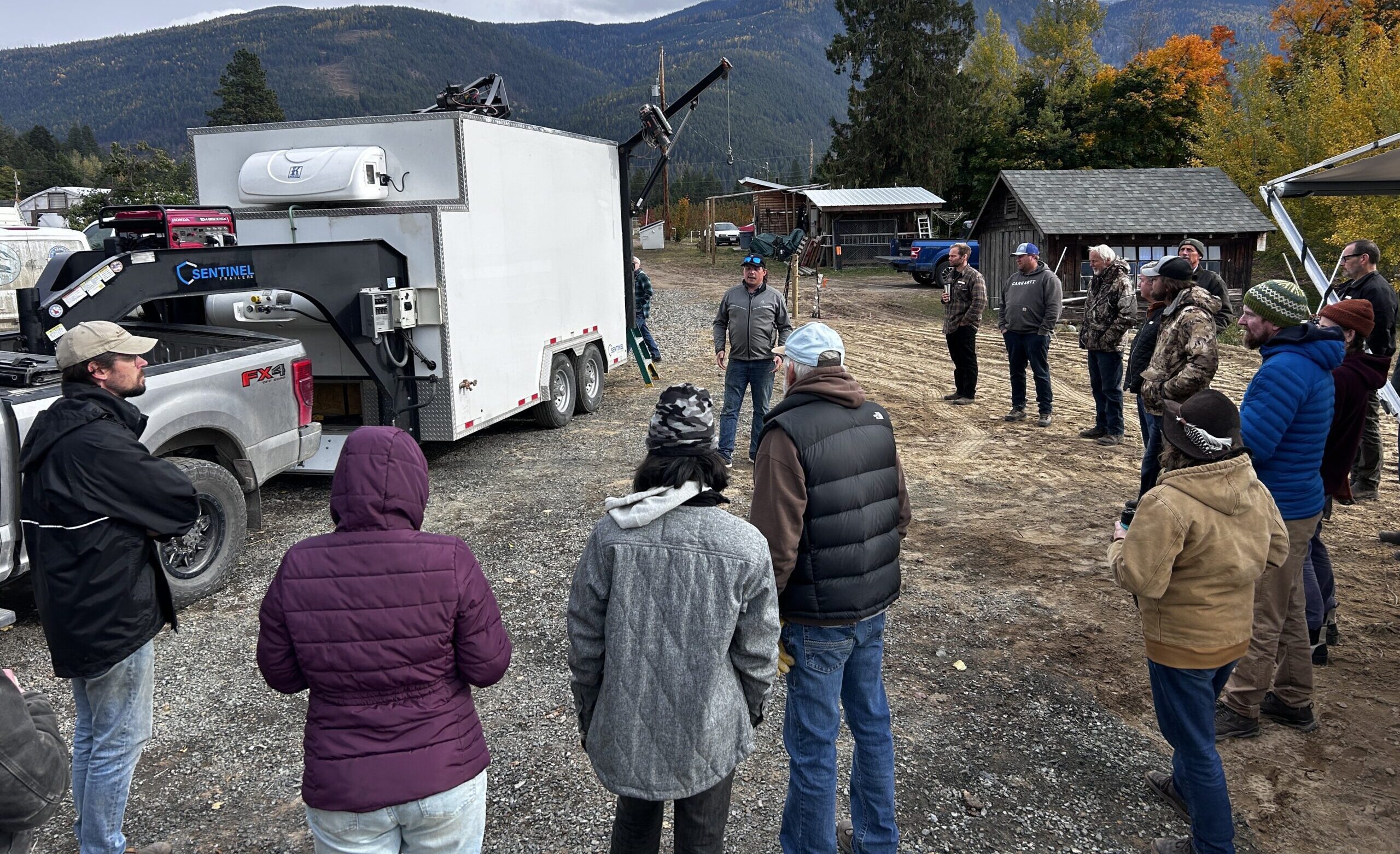
Since its inception in 2018, the Small-Scale Meat Producers Association (SSMPA) has provided a strong voice for approximately 7,000 BC farmers and ranchers who raise meat outside of the conventional system. About half of these businesses are located in the Southern Interior region where a lack of slaughter and cut-and-wrap capacity is the greatest barrier to industry growth.
“The last few years have been tumultuous for the small-scale meat sector,” says SSMPA Executive Director, Julia Smith. “Four local meat processing facilities closed, leaving many producers with no processing options for market-ready livestock, and no ability to scale their businesses. Some simply gave up, while others supported their operations with off-farm income and/or shipped their live animals out of the province for processing.”
The SSMPA is helping address these challenges with a timely initiative to develop a Southern Interior Butcher Hub Network. Similar to food hubs which provide shared-use infrastructure and equipment for food processing, butcher hubs provide these resources for processing meat. Butcher hubs can also assist producers and processors with administrative help such as standard operating procedures, safety protocols, employment contracts and other resources. Related industries such as feed stores, hay producers, equipment suppliers, consumers, retailers and restaurants also benefit from having access to locally raised meat.
The Economic Trust of the Southern Interior (ETSI-BC) supported the project through its Innovating and Advancing Key Sectors funding stream. “Now more than ever, we need to revitalize rural economies and provide stable employment opportunities and food security for our communities,” says Laurel Douglas, CEO of ETSI-BC.
Solution Driven Community Engagement
At the start of the project, industry members with diverse skills and experience came together from across the region to participate in community engagement sessions, sharing information about the needs, opportunities and challenges their communities were facing.
When abattoir closures occurred, the SSMPA worked closely the BC Ministry of Food and Agriculture to fast-track farmgate licences for two family farms. One of the farms built a fully inspected abattoir on its Yankee Flats property and now provides slaughter and cut and wrap services for red meat. The business went on to open a retail butcher shop in Vernon, and partners with the local school district to provide boxes of meat to local families at a discount.
The association workedwith the Ministry of Agriculture on an app designed to streamline the booking process for producers needing abattoir and cut and wrap services. An online database of meat processing resources was also created and is accessible through the SSMPA’s website.
Industry Training to Attract Skilled Workers
The lack of butchers and meat cutters in the region is another major industry challenge, even though wages are competitive with many other trades. The SSMPA is collaborating with several organizations to implement new training options including Thompson Rivers University and the Nicola Valley Institute of Technology. It is also working with the Tkemlups te Secwepemc, and ?Esdilagh First Nations where mobile slaughter trailers provided by the SSMPA will be used for training as well as on-farm slaughter services.
The SSMPA promotes training in whole animal butchery where butchers get to know the producers they work with and how they raise their animals—factors that enhance pride in the profession, attract new entrants and help create jobs.
Another project is underway with the Kamloops Food Policy Council to develop an emergency response program during disasters such as wildfires, floods and disease outbreaks. In the event of a disaster, a mobile slaughter trailer would be deployed where it is needed along with volunteers trained in livestock handling, slaughter and cut-and-wrap. The association is also exploring ways to increase pasture-based poultry production through a project with the BC Chicken Marketing Board.
These examples of collaboration and forward-thinking will help ensure that the small scale meat producers in the Southern Interior of BC build back stronger.
Looking Forward
“With the support received from ETSI-BC, the SSMPA has greatly extended our reach across the Southern Interior,” says Smith. “We look forward to working with our stakeholders to continue the momentum and bring greater stability and growth opportunities to meat producers and processors throughout the province.”
More News & Stories
ETSI-BC Fall Funding Intake Draws Impressive Regional Interest
October 8, 2026 – The Economic Trust of the Southern Interior (ETSI-BC) received an impressive response to its 2026 Fall Funding Intake from communities and organizations across the region. The intake closed on October 8, 2026, with 43 applications requesting nearly $1.9 million in funding for projects with a combined project value of over $3.8 million.
Township of Spallumcheen Digs Deep in Planning New Agriculture Business Hub
Since 2021, the Township of Spallumcheen has been exploring the development of a regional Agri-Hub to strengthen local food distribution and support agricultural growth. With support from ETSI-BC, the Township is developing a phased business plan to help build a resilient and profitable agricultural sector for the future.
New Tourism Strategy Transforms Grand Forks from a Highway Stop to a Destination
The Southern Interior community of Grand Forks has completed a major rebuild and relaunch of its original tourism strategy, shifting the community from being a quick stopping point on Highway 3 to a tourism destination. With support from the Economic Trust of the Southern Interior (ETSI-BC), the strategy served to develop new tourism assets attracting more visitors and generating increased revenue for local businesses.
Sicamous Tourism Strategy Builds a Path for Sustainable Growth
From houseboating to sledding, hiking, biking, and birding, Sicamous is the tourism hub of the Shuswap region. While summer visitors fill Sicamous with activity, off-season visitations drop sharply, prompting the community to pursue a more diversified and sustainable year-round tourism future. The Economic Trust of the Southern Interior (ETSI-BC) supported the District of Sicamous Development Corporation in revitalizing the community’s tourism sector with a dynamic, five-year tourism strategy to 2030.
Forestry Strategy Positions ?aq’am First Nation for New Opportunities
Increased timber harvest allocations for BC’s First Nations are opening the door to new business opportunities for enterprising First Nations communities such as ?aq’am in the East Kootenays. With funding support from the Economic Trust of the Southern Interior (ETSI-BC), ?aq’am developed a forestry business scan, a strategy to build capacity for projects made possible by the expanded forest tenure. The scan is guiding ?aq’am to increase its role in forestry as it pursues a resilient and sustainable future.
ETSI-BC Welcomes Krista Mallory as Regional Project and Strategic Initiatives Manager
July 29, 2026 – The Economic Trust of the Southern Interior (ETSI-BC)) is pleased to announce that Krista Mallory will be joining the organization as its new Regional Project and Strategic Initiatives Manager effective October 1, 2026.
Wayfinding in Barriere for Economic Resilience and Growth
When a major fire destroyed the Tolko sawmill in the North Thompson region near Barriere in 2003, residents and stakeholders rallied to rebuild and redefine the community’s economic future. As the community has evolved, so have the systems that help residents and visitors navigate in and around Barriere, including a multi-phase Wayfinding Strategy launched in 2024. The project, supported by the Economic Trust of the Southern Interior (ETSI-BC) is aimed at boosting visitor traffic and attracting more business investment, ensuring a strong and resilient future.
Five-Year Plan Strengthens ?aq’am Community Enterprises
?aq’am Community Enterprises (ACE) is the economic development arm of the ?aq’am First Nation, the largest member of Ktunaxa Nation. Known for its progressive business development goals, ACE undertook a comprehensive review of its strategic priorities. The result is a dynamic new five-year strategic plan that will guide more efficient, tactical, and resilient delivery of ACE’s programs and services. The project was supported by the Economic Trust of the Southern Interior (ETSI-BC).
Thompson-Okanagan Launches New Economic Development Practitioners Network
After a year of work connecting economic development practitioners across the Thompson-Okanagan, the region’s first Economic Development Practitioners Network (EDPN) is now in place. Modelled after the Kootenay Boundary EDPN created in 2014, the Thompson Okanagan EDPN includes community and municipal and First Nations economic development practitioners, Chambers of Commerce, Community Futures and other stakeholders. The group came together for the first time on April 8, 2026, where they learned, shared ideas and information, and further planned future activities. The Economic Trust of the Southern Interior (ETSI-BC) is committed to supporting both the Kootenay Boundary and Thompson-Okanagan networks of economic development practitioners.