
Since 2021, the Township of Spallumcheen has been exploring the development of a regional Agri-Hub to strengthen local food distribution and support agricultural growth. With support from ETSI-BC, the Township is developing a phased business plan to help build a resilient and profitable agricultural sector for the future.

Nelson Innovation Centre Spurs Growth in Kootenay Technology Sector
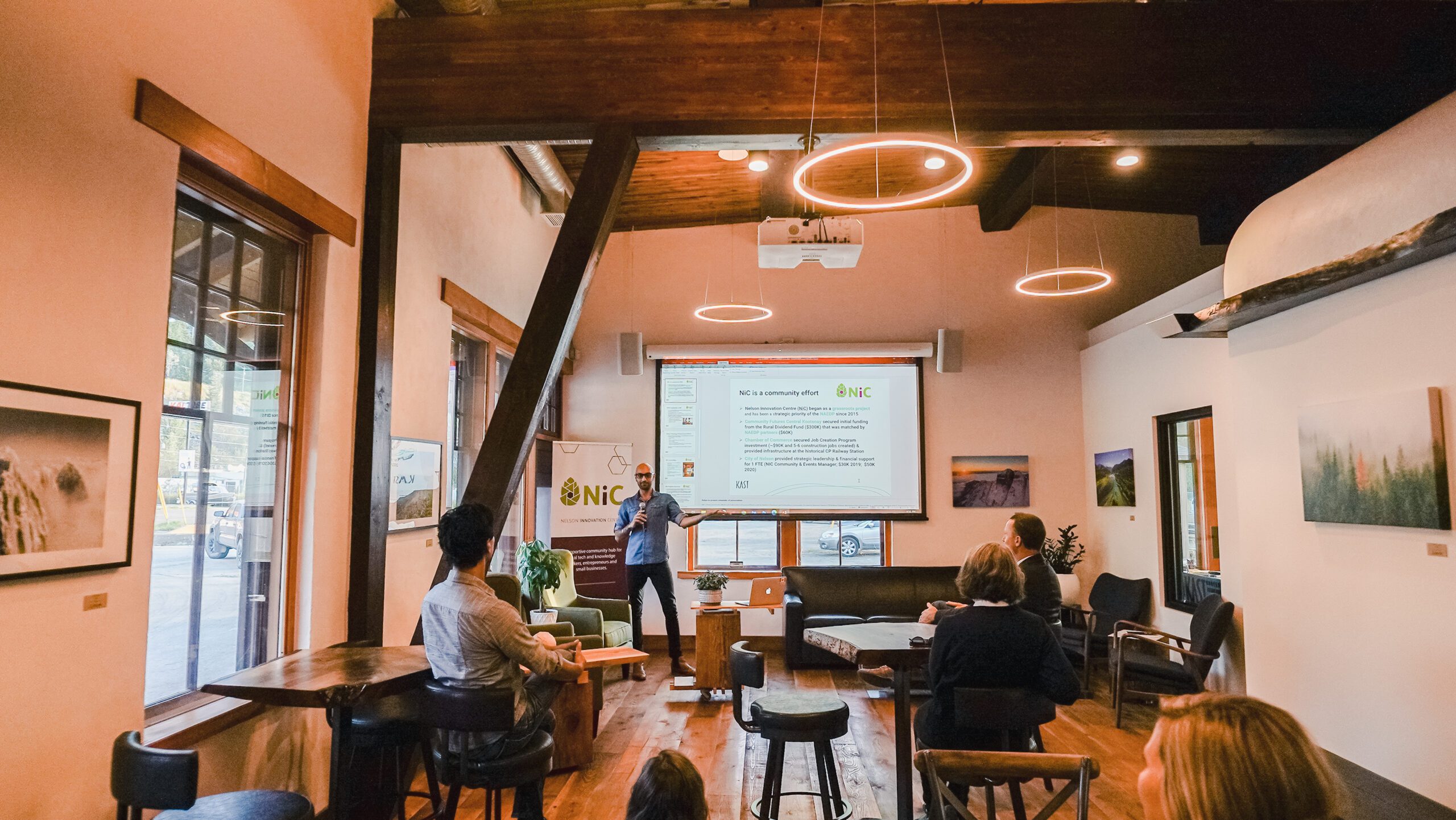
If you are a technology entrepreneur in a rural area like the Kootenays, connection is everything. Tech start-ups have specific needs, from office and meeting space to mentoring, training, funding and connection with like-minded individuals.
Business incubators such as the Nelson Innovation Centre (NIC) are a boon to young tech firms, providing shared access to the resources they need in the community where they are located. Companies that are supported through a business incubator have a survival rate much higher than unassisted companies, and the cost of launching and operating their business can be reduced by up to 50 percent. For the estimated 7,000 workers in the Kootenays` burgeoning technology sector, completion of Nelson Innovation Centre (NIC) in 2020 represented a significant growth opportunity.
Historic architecture houses new innovation
The Nelson Innovation Centre is managed by the Kootenay Association for Science and Technology (KAST), which has supported the regional technology sector for over two decades. Years of research and collaboration within the region`s business and technology community provided the basis for the Nelson Innovation Centre, and the development of its unique physical location in the historic CPR Station in Nelson. ETSI-BC contributed $50,000 towards renovations to the CPR Station to fund startup costs and help tech entrepreneurs to access space for delivery of programs and professional workspace. Funding for the project was also provided by the City of Nelson, Discovery Foundation, the Rural Dividend Fund and Western Economic Diversification Canada (now PacifiCan).
Innovative thinking is built into the design of the NIC, which was carried out under the direction of general contractor, designer and project manager, Joern Wingender. Lofty ceilings, exposed timber beams and extensive use of raw wood throughout the 1,500-foot space respect its history and original construction. At the same time, it has a clean, modern look that reflects the open thinking associated with the Kootenay lifestyle.
The anchor of the facility is The Station Boardroom, a professional meeting space with a massive skylight that invites people to look up to the historic timber ceiling. KAST members and guests can use The Hub Lounge to attend workshops, for professional meetings or simply to work on their laptops. A custom private work booth is available for video conferencing, and leasable office space is available for tech and tech-enabled companies.
Wrap around programs accelerate entrepreneurial success
The programs and services at KAST are tailored to the needs of the rural tech community, particularly companies involved with technology innovation and the gig economy, where contracts and freelance work prevail over full-time jobs. The KAST core programs help entrepreneurs enter or expand in the digital economy, research the feasibility of their ideas, become investor-ready, commercialize their technology, and navigate the economic impacts of COVID-19. KAST also provides concierge referrals for local tech ventures to other businesses, programs to inspire youth to explore post-secondary opportunities in science and technology, and programs to support women in establishing and growing their technology businesses. Over the long-term, NIC will help to create modern, inclusive, high-paying, environmentally and socially responsible jobs, and sustainable wealth-creation.
With revenue from events, workshops and rental of office space, NIC aims to be self-sustaining without the need for continued operational funding. Currently it supports two employees, Manager Melanie Fontaine, and Communications and Programming Specialist, Crystal Swan.
Fontaine points out that KAST has served hundreds of small and medium sized businesses and start-ups since its inception, but its own growth has not been without challenges. After a soft opening of NIC in 2020, COVID-19 restrictions prevented monthly meetups and other in-person gatherings. Planning shifted to emphasize virtual training and these programs have been well attended. As the centre continues to adapt to changing COVID protocols and some lessening of restrictions, a gradual re-opening of NIC is planned for mid-December 2021, including tech meet-ups and information sessions.
“Across the Kootenays, we have an impressive and growing tech community filled with passion to make a difference,” says Fontaine. “KAST is a vital resource for both tech and non-tech businesses in a large rural area, and it benefits from the support of many organizations, including ETSI-BC, as well as the collaboration of businesses working together to grow our region. With our NIC community hub, expect to see much more from KAST as we continue to expand our reach in the Kootenays promoting innovation and economic development.”
More News & Stories
New Tourism Strategy Transforms Grand Forks from a Highway Stop to a Destination
The Southern Interior community of Grand Forks has completed a major rebuild and relaunch of its original tourism strategy, shifting the community from being a quick stopping point on Highway 3 to a tourism destination. With support from the Economic Trust of the Southern Interior (ETSI-BC), the strategy served to develop new tourism assets attracting more visitors and generating increased revenue for local businesses.
Sicamous Tourism Strategy Builds a Path for Sustainable Growth
From houseboating to sledding, hiking, biking, and birding, Sicamous is the tourism hub of the Shuswap region. While summer visitors fill Sicamous with activity, off-season visitations drop sharply, prompting the community to pursue a more diversified and sustainable year-round tourism future. The Economic Trust of the Southern Interior (ETSI-BC) supported the District of Sicamous Development Corporation in revitalizing the community’s tourism sector with a dynamic, five-year tourism strategy to 2030.
Forestry Strategy Positions ?aq’am First Nation for New Opportunities
Increased timber harvest allocations for BC’s First Nations are opening the door to new business opportunities for enterprising First Nations communities such as ?aq’am in the East Kootenays. With funding support from the Economic Trust of the Southern Interior (ETSI-BC), ?aq’am developed a forestry business scan, a strategy to build capacity for projects made possible by the expanded forest tenure. The scan is guiding ?aq’am to increase its role in forestry as it pursues a resilient and sustainable future.
ETSI-BC Welcomes Krista Mallory as Regional Project and Strategic Initiatives Manager
July 29, 2026 – The Economic Trust of the Southern Interior (ETSI-BC)) is pleased to announce that Krista Mallory will be joining the organization as its new Regional Project and Strategic Initiatives Manager effective October 1, 2026.
Wayfinding in Barriere for Economic Resilience and Growth
When a major fire destroyed the Tolko sawmill in the North Thompson region near Barriere in 2003, residents and stakeholders rallied to rebuild and redefine the community’s economic future. As the community has evolved, so have the systems that help residents and visitors navigate in and around Barriere, including a multi-phase Wayfinding Strategy launched in 2024. The project, supported by the Economic Trust of the Southern Interior (ETSI-BC) is aimed at boosting visitor traffic and attracting more business investment, ensuring a strong and resilient future.
Five-Year Plan Strengthens ?aq’am Community Enterprises
?aq’am Community Enterprises (ACE) is the economic development arm of the ?aq’am First Nation, the largest member of Ktunaxa Nation. Known for its progressive business development goals, ACE undertook a comprehensive review of its strategic priorities. The result is a dynamic new five-year strategic plan that will guide more efficient, tactical, and resilient delivery of ACE’s programs and services. The project was supported by the Economic Trust of the Southern Interior (ETSI-BC).
Thompson-Okanagan Launches New Economic Development Practitioners Network
After a year of work connecting economic development practitioners across the Thompson-Okanagan, the region’s first Economic Development Practitioners Network (EDPN) is now in place. Modelled after the Kootenay Boundary EDPN created in 2014, the Thompson Okanagan EDPN includes community and municipal and First Nations economic development practitioners, Chambers of Commerce, Community Futures and other stakeholders. The group came together for the first time on April 8, 2026, where they learned, shared ideas and information, and further planned future activities. The Economic Trust of the Southern Interior (ETSI-BC) is committed to supporting both the Kootenay Boundary and Thompson-Okanagan networks of economic development practitioners.
2027-30 Strategic Planning and DAAP 4.39 Updates
June 25, 2026 – The Economic Trust of the Southern Interior (ETSI-BC) is grateful for the input from partners, funding recipients, committee members and other regional stakeholders who have taken the time to help inform our next three-year Strategic Plan for 2027-30. We are also pleased to provide an update on the status of the DAAP 4.39 action item.
ETSI-BC Fall 2026 Funding Intake: Up to $1M Available for Projects
June 18, 2026 – The Economic Trust of the Southern Interior (ETSI-BC) is pleased to announce that its next Funding Intake will launch on Tuesday, September 1, 2026 and close on Thursday, October 1, 2026.