

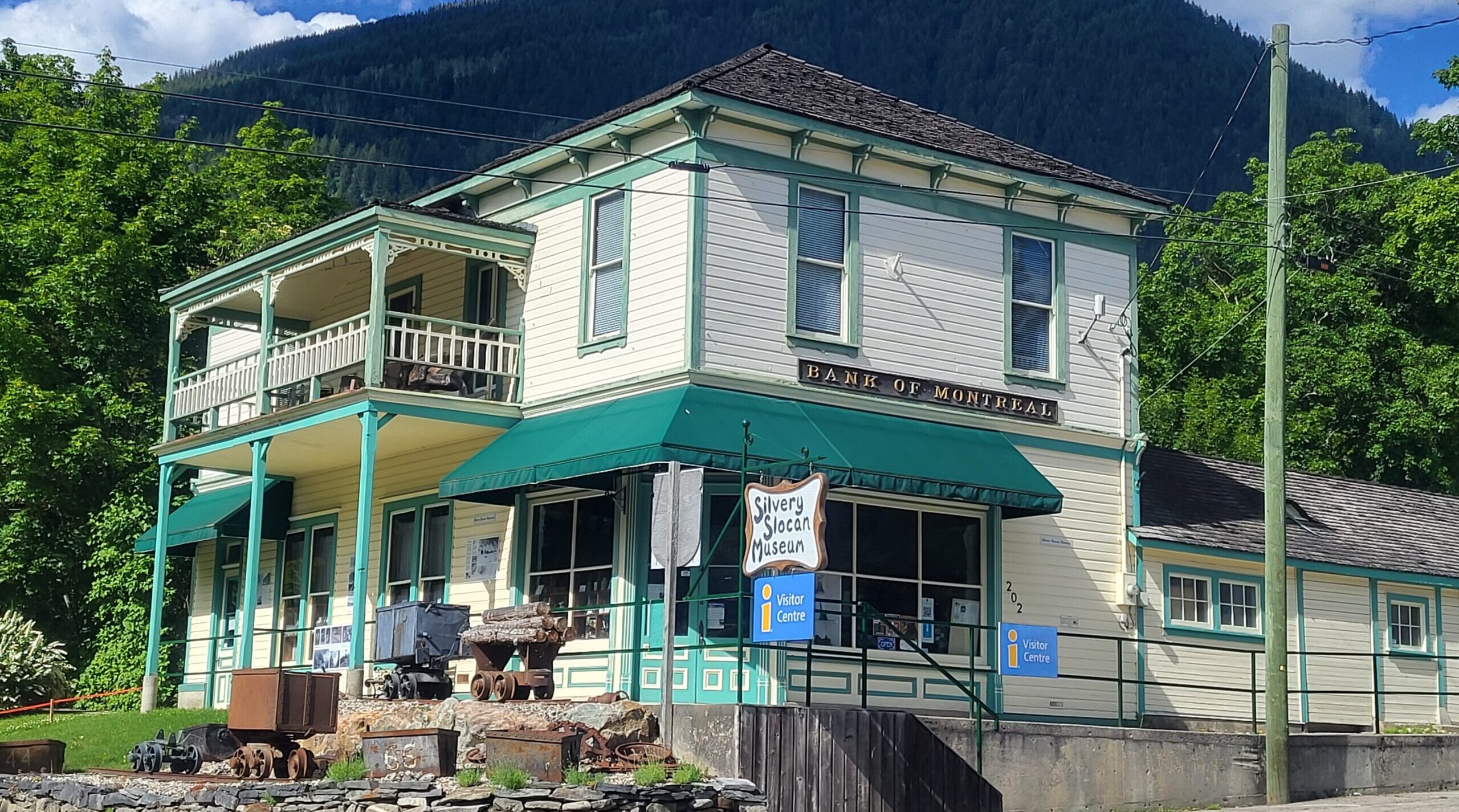
Tucked away in the Slocan Valley of BC and close to world class outdoor amenities, the Visitor Information Centre (VIC) in New Denver has been a stopping point for thousands of visitors for the past ten years. Visitor traffic to the VIC is an important source of revenue for the Slocan Valley Chamber of Commerce (SVCC) but has declined significantly since the pandemic. By 2023, a more high-profile location was considered as a way to boost tourism traffic and address ageing infrastructure at the Silvery Slocan Museum where the VIC is located.
With funding support from the Economic Trust of the Southern Interior, the Chamber conducted a feasibility study to determine the financial impact of making such a move. ETSI-BC spoke with Jan McMurray, President of the SVCC about the value of the study.
What was the inspiration for this project?
Jan: The impact of COVID hit our visitor centre hard with a decline in tourism traffic of 46% between 2019 and 2023 as visitors turned to digital navigation for information. That was more than the 28.9% average decline for VIC’s across the province. Not only did this reduce merchandise sales at the VIC, we were also concerned about the longevity of our location in the Museum; space to move about was limited, it had only one washroom, limited accessibility and no heat in the winter.
We thought that a purpose-built building in a higher profile location would be the ideal solution, so when a property came up for sale that would be suitable once renovated, we initiated the study to determine if the concept was viable.
What did the work consist of?
The research, done by economic development consultant Mike Stolte, provided a detailed profile of the New Denver VIC compared to other VICs in the province. He looked at population trends, what attracts people to communities, traffic counts and other demographics, and costs that would be incurred through such a project. Other suggestions were generated through interviews with local businesses, elected officials and Chamber board members and staff such adding a book shop, an E-bike charging station, and meeting rooms and coworking space.
The location we had in mind was close to the junction of the two major highways serving the Slocan Valley, but we also looked at four other potential locations. Every detail was considered from the cost of each building, renovations, furnishings, maintenance and operating expenses – information we would never have had without this kind of research.
The conclusion was that all of the locations would require significant capital and a major increase in operating costs that were not sustainable for the VIC.
Was the study worthwhile even though it didn’t support your original goal?
Absolutely! The study drew our attention to the positives of the current location, which was still inexpensive compared to any of the options considered and is subsidized by the Village of New Denver.
The study also provided us with recommendations as to how to move forward. These included adding more signage to direct tourists to the VIC, making structural improvements to the heating system, and adding a second washroom and storage. Collaborating with Indigenous groups was emphasized to add visibility to Indigenous culture and history along with prioritizing local products for sale to increase revenue and financial stability. It also pointed out the value of working closely with the Village of New Denver, a key stakeholder in tourism development with links to funding resources. The Village also owns vacant lots and properties that the Chamber might consider for a VIC.
What’s Next for the Chamber and VIC?
Perhaps the most important outcome of this study was the recommendation to develop a strategic plan for a new VIC which identifies sources of income, project champions in the community as well as businesses and organizations that may want to co-locate with the VIC in the future.
With improved clarity of our goals and how to get there, we’re already implementing some of these suggestions, confident that the VIC will continue to serve our visitors while bringing resilience and growth to the Slocan Valley economy.